

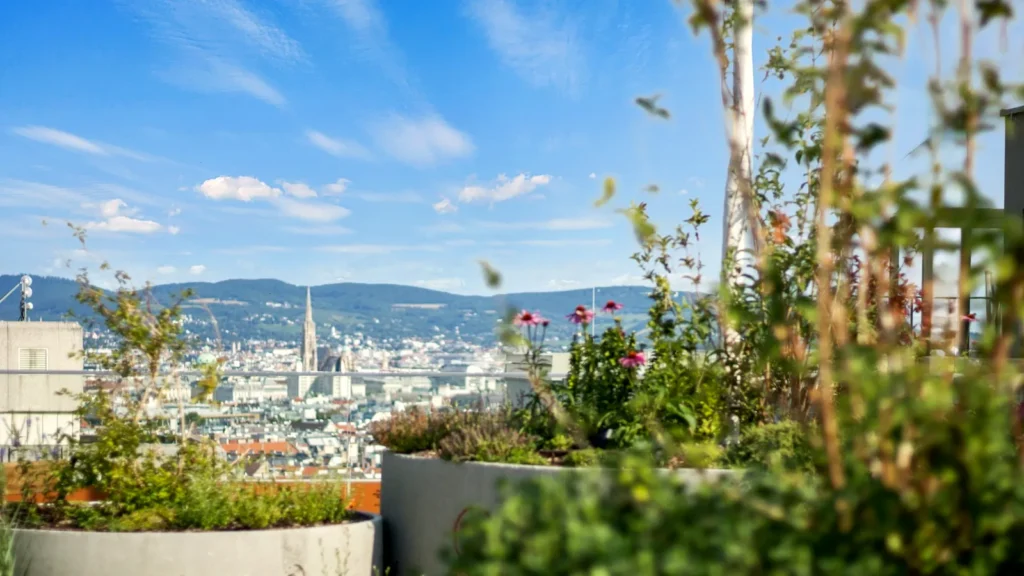

Living in Serbia as a foreigner can change how we experience relationships, emotional safety, cultural identity, and even our sense of who we are. This article explores what happens when we have practically adapted to a new country, but emotionally we are still looking for our place.
- Living in Serbia as a foreigner can feel good in practice and still be lonely or unsettling emotionally. Both can be true at once.
- In 2024, 34,155 foreign nationals received a residence permit in Serbia for longer than a year; about half were citizens of Russia.1
- Research on 571,260 migrants links feeling connected and not lonely with better adaptation, and discrimination and acculturative stress with worse.10
- Russians and Ukrainians in Serbia live in the same place but often carry very different experiences of leaving.
- Keeping our own culture and taking part in Serbian life do not exclude each other.9
- English-speaking psychotherapy is available in person in Belgrade, abroad and online.
We May Have Moved to Serbia, but Not Every Part of Our Life Moved With Us
Perhaps we have been living in Serbia as a foreigner for six months, two years, or even a decade. We have learned where to shop, how to navigate Belgrade, which cafés we enjoy, and perhaps a few Serbian expressions that make everyday conversations easier. We may have found employment, opened a business, enrolled our children in school, or begun building friendships.
Someone asks how we like living in Serbia. We answer, “It’s good. People are friendly. I’m settling in.” And perhaps all of that is true.
Yet later that evening, something shifts. We scroll through photographs of friends who live somewhere else, receive a message from a family member, or try to explain something important in a language that does not quite feel like our own. And we notice a more complicated feeling.
We have begun building a life here, but we do not always know where we belong.
Sometimes we miss home.
Sometimes we do not miss the country itself, but the people, relationships, routines, and version of ourselves that existed there.
Sometimes we feel relief that we left.
Sometimes we feel guilty about that relief.
And sometimes we are surprised to discover that even when our new life is going well, we can experience grief about the life that changed.
What makes living in Serbia as a foreigner emotionally complex
Migration is not only the experience of arriving somewhere new. It is also the experience of renegotiating our relationship with everything and everyone that remains important to us. This is why emotional adaptation to living in Serbia as a foreigner can be more complex than it looks. It is more than learning the language, understanding local customs, or finding a social community. It involves our history, our relationships, the expectations we carry, and the ways we have learned to experience closeness, autonomy, uncertainty, and belonging.
Why People Move to Serbia: Many Ways of Living in Serbia as a Foreigner
There is no single experience of being a foreigner in Serbia. Some people move here because they have fallen in love with a Serbian partner. Others relocate for employment, professional opportunities, education, entrepreneurship, or a different lifestyle. Some come from Western Europe or North America seeking change. Others arrive from China, India, Turkey, Nepal, Sri Lanka, or neighbouring countries, bringing different cultural, professional, and family experiences. And some people come because remaining in their country of origin has become dangerous, intolerable, or incompatible with the life they want to live.
These distinctions matter.
According to the Statistical Office of the Republic of Serbia, 34,155 foreign nationals immigrated to Serbia during 2024, meaning they received a residence permit for longer than one year. Citizens of the Russian Federation were by far the largest group, with 17,103 people, about half of all immigration of foreign nationals that year.1 Among foreigners working in Serbia at the end of 2025, the largest groups were citizens of Russia, China, India, Turkey, and Nepal.2
These figures describe registered immigration, rather than the total number of people living in Serbia as a foreigner. They also cannot tell us what people have emotionally experienced. We cannot understand someone’s migration simply by looking at their passport.
Two people living in Serbia as a foreigner, two different migrations
Consider two people who both live in Belgrade. One has relocated for a professional opportunity, maintains frequent contact with family abroad, and feels free to return home whenever they wish. Another has left a country affected by war, has loved ones who remain in danger, and cannot safely return.
Both are learning to navigate Serbia. Both may experience loneliness, cultural adjustment, or uncertainty. But the emotional meaning of their relocation is not the same. For the first person, migration may primarily represent exploration, professional development, and chosen separation. For the second, it may also involve displacement, grief, loss of control, and continuing concern for people who remain behind.
This does not mean that voluntary relocation is always easy or that forced displacement inevitably produces psychological difficulties. It means that the way we left shapes our choices and the relationships we leave behind. It also shapes the meaning we give to our new life.
Therapy for expats in BelgradeIn English, in person and onlineA psychologically informed approach to migration must begin with those differences rather than treating every newcomer as an expat looking for a better social life.
Russians and Ukrainians Living in Serbia: Shared Geography Does Not Mean Shared Experience
Since Russia’s full-scale invasion of Ukraine in February 2022, Serbia has become a place of residence for people who left Russia and for people displaced from Ukraine. But we need to distinguish these experiences carefully.
Ukrainians displaced by war
For Ukrainians who fled the invasion, migration may be inseparable from the destruction, danger, and uncertainty created by war.3 War has separated some of them from partners, parents, friends, or other family members who remain in Ukraine. Some may be concerned about relatives serving in the armed forces, people living in affected areas, or homes and communities that have been damaged. Others may have been living abroad before the invasion and experienced its consequences from a distance. No single Ukrainian experience can describe them all.
Russian citizens who relocated to Serbia
For Russian citizens who relocated to Serbia, circumstances also vary. Some left because of political repression, opposition to the war, fears about mobilisation, or concerns about personal safety. Others moved for economic, professional, or family reasons.
The Belgrade Centre for Security Policy’s 2025 research documents varied motives among Russian migrants who arrived after February 2022, including security, political, and economic considerations. It also shows that many respondents reported feeling safe and relatively well adapted in Serbia.4 But a sense of safety does not tell us everything about the experience of belonging. A person may feel physically secure while remaining uncertain about their identity, future, family relationships, or emotional connections.
When the social environment touches the war
There is another important dimension to living in Serbia as a foreigner from Russia or Ukraine. The country’s historical, political, and cultural relationships with Russia and Ukraine form part of the social environment that people encounter.
A Ukrainian resident may hear statements about Russia or the war that evoke anger, sadness, fear, or a sense of being misunderstood. A Russian resident opposed to the invasion may feel uncomfortable when others assume that their nationality indicates support for the Russian government.
These experiences are not politically or morally interchangeable. We need to name Russia’s invasion and its consequences for Ukrainians accurately. At the same time, understanding an individual person’s emotional experience requires that we do not reduce them to their nationality.
Shared spaces, separate spaces
We also cannot assume that Russian and Ukrainian newcomers wish to participate in shared communities or discussions about their experiences. Some may find opportunities for solidarity and mutual understanding. Others may need clear boundaries or prefer separate spaces. Psychological support should respect these differences without expecting reconciliation, political agreement, or emotional openness as a condition of belonging.
Before asking how someone is adapting to Serbia, we need to understand what leaving their previous life meant for them.
По-русски
Вы переехали в Сербию из России?
Жизнь в Сербии в качестве иностранца может менять наши отношения, чувство безопасности и ощущение того, кто мы есть. Психотерапия в Белграде на английском языке: лично и онлайн.
Українською
Ви переїхали до Сербії з України?
Життя в Сербії як іноземця може змінювати наші стосунки, відчуття безпеки та уявлення про те, ким ми є. Психотерапія в Белграді англійською мовою: особисто та онлайн.
You do not have to sort this out alone.
If living in Serbia as a foreigner feels like this for you, we can talk about it in English, in person in Belgrade, abroad or online.
Attachment and Migration: What Happens When Our Secure Base Is Somewhere Else?
Attachment theory offers an important perspective on why relocation can feel emotionally destabilising even when the practical aspects of life are going well. Originating in the work of John Bowlby, attachment theory explores the importance of relationships that provide comfort, protection, emotional availability, and a foundation for exploration.
In adult attachment research, the concept of a secure base describes the way responsive, supportive relationships can help us engage with the world, pursue goals, and tolerate the uncertainties involved in trying something new. For example, Brooke Feeney’s research on adult attachment and secure-base support examined how responsive support from an intimate partner is relevant to exploration and goal pursuit.5
But what does this mean when we move to Serbia? Imagine that before relocation we had close relationships with people who knew us for many years. They understood our humour and knew how we responded under stress. They remembered important family events. Often they could notice that we were struggling without requiring an explanation. These relationships provided more than social contact. They contributed to a sense of continuity and emotional familiarity.
After moving, we may still be in contact with those people. Yet physical distance, time differences, changed routines, and the demands of everyday life can alter how we seek and receive support. We might have people who know us deeply but live thousands of kilometres away. Meanwhile, the people nearby may still know relatively little about us.
We have company without intimacy. And intimacy without proximity.
When stress arrives while living in Serbia as a foreigner
This can be particularly difficult during periods of stress. Perhaps we receive disappointing news while living in Serbia as a foreigner. Our first instinct is to contact someone back home. But it is late there, or that person is dealing with difficulties of their own. Perhaps we need someone to accompany us to a medical appointment, but we hesitate to ask a relatively new acquaintance. Or perhaps we have become so accustomed to handling everything ourselves that asking for help feels more uncomfortable than the problem itself.
Attachment-informed psychotherapy can help us explore the meanings we attach to closeness, dependence, support, and separation. Some of us may find it relatively easy to develop new relationships while maintaining important connections abroad. Others may become increasingly anxious when people seem unavailable. And some may cope by becoming intensely self-reliant, avoiding situations in which they might need another person.
However, we should not automatically interpret these responses as attachment disorders or insecure attachment styles. Someone may have a long history of secure relationships and still struggle when familiar support is disrupted by migration. The question is not simply, “What attachment style do you have?” A more useful question may be:
What happens to our experience of emotional security when the relationships that have supported us are no longer part of our immediate environment?
Cultural Scripts: The Unspoken Rules a Foreigner Meets Living in Serbia
One of the most interesting aspects of migration is that cultural differences often become visible through ordinary interactions.
- Someone invites us to coffee.
- A neighbour offers help.
- A colleague asks a personal question.
- Our partner’s mother calls unexpectedly.
- A short message: “Važi.”
- Someone says: “Čujemo se.”
These moments may seem insignificant. Yet each can involve expectations about politeness, intimacy, privacy, obligation, trust, and emotional meaning.
In transactional analysis, Eric Berne described the life script. It is a pattern of expectations and behaviour that develops through early experience and the meanings we give to it. Later authors explored how wider culture shapes these patterns too. One of them is Marco Mazzetti, in his 2010 article Eric Berne and Cultural Script.6
A cultural script does not mean that everyone from a particular country behaves identically. Rather, it draws attention to expectations that are socially transmitted and may become so familiar that we rarely question them. For example, in some families and environments, privacy may be strongly emphasised, and offering unsolicited help might be experienced as intrusive. Elsewhere, practical involvement in another person’s life may be one of the primary ways of expressing care. Someone may have learned that refusing an invitation is a normal expression of personal choice. Another person may have learned that refusal carries an emotional meaning and should be softened or carefully explained.
When these expectations meet, misunderstandings can emerge even when neither person has intended harm.
“Ajde na kafu”: an invitation or a promise?
Consider the familiar Serbian expression, “Ajde na kafu”, “Let’s have coffee.” It may be a genuine proposal to meet. It may be a spontaneous expression of friendliness. And sometimes it may be an informal suggestion that never becomes an actual plan. There is no single meaning, and Serbian speakers themselves differ in how they use it.
But imagine that we grew up in an environment where suggesting a meeting usually meant that someone was prepared to arrange a specific time. We may assume that the Serbian acquaintance intends to contact us. When that does not happen, we feel disappointed. Perhaps we wonder whether the person was insincere. Perhaps we conclude that they do not like us. Or perhaps we feel embarrassed because we interpreted the interaction as more meaningful than it was.
From a relational perspective, we can explore several possibilities at once:
- What was actually communicated?
- How does this person usually communicate?
- What meaning did we assign to their words?
- What did we expect would happen next?
- What emotional experience was activated when our expectation was not met?
Transactional analysis helps us distinguish the explicit social exchange from the psychological meanings and expectations that may accompany it. Psychodynamic thinking can also help us explore whether expectations from earlier relationships influence our interpretation of what is happening now.
But we must be careful. Not every misunderstanding is a projection from childhood. Sometimes it genuinely reflects differences in communication, unclear expectations, or the other person’s failure to follow through.
Cultural awareness does not mean explaining away someone’s behaviour. It means having more ways to understand an interaction before deciding what it means.
Serbian Hospitality: Why Feeling Welcome Is Not Always the Same as Belonging
People often associate Serbia with social gatherings, hospitality, family occasions, and the cultural importance of spending time together. We may experience this through neighbours who offer assistance, colleagues who invite us for coffee, or families who welcome us into their homes. For some people living in Serbia as a foreigner, these encounters become among their most cherished memories of living here. For others, they are enjoyable but occasionally confusing.
Imagine that we have been invited to a Serbian family’s slava, the celebration of its patron saint. Our hosts welcome us, offer food, introduce us to relatives, and include us in the gathering. Slava is a recognised element of Serbian cultural heritage, and the tradition can play an important role in maintaining family and social relationships.7
Welcome, but still an outsider
Yet being invited into an established family tradition can evoke different feelings. Anyone living in Serbia as a foreigner may recognise this mix. We may experience genuine warmth and inclusion. Curiosity may mix with uncertainty about the customs. Some of us feel pressure to behave correctly. Or we may appreciate the invitation while noticing that everyone around us shares a history we do not. People refer to childhood memories, family events, old friendships, and experiences that happened long before we arrived.
We are welcome. But we may still feel like an outsider.
This is not necessarily because anyone has excluded us. It may reflect the simple fact that belonging involves more than being accepted into a room. It also involves time, shared experience, mutual recognition, and opportunities to become part of the relationships that already exist. And sometimes the environment genuinely limits those opportunities.
Hospitality can open the door to connection. Belonging develops through what becomes possible between people afterwards.
Learning Serbian and Losing Our Familiar Voice as a Foreigner Living in Serbia
Language is one of the most obvious challenges of living in Serbia as a foreigner, but its emotional significance is sometimes underestimated. For anyone living in Serbia as a foreigner, learning Serbian may allow us to communicate with neighbours, colleagues, healthcare professionals, teachers, and local institutions. It can expand our independence and create opportunities for relationships.
However, language is not merely an instrument for exchanging information. It is also connected to emotional memory, humour, identity, and the way we experience ourselves in communication. Perhaps we can manage an appointment in Serbian but struggle to explain that something has hurt our feelings. Discussing business may be easy, while expressing tenderness feels difficult. We may understand a joke but be unable to respond with the spontaneity we would have in our native language. Some of us even notice that we become quieter, more cautious, or less confident when speaking Serbian.
Someone who was articulate, humorous, and socially confident in their home country may suddenly experience themselves as hesitant or dependent. That does not mean their personality has changed. Part of their familiar way of expressing themselves may simply be less accessible in the new language.
And the responses of others matter. If people are patient and curious, we may feel increasingly comfortable. If they interrupt, mock mistakes, or assume that limited language proficiency reflects limited intelligence, the experience can become considerably more difficult.
Which language do our feelings speak?
For multilingual individuals, emotional experiences may also be expressed differently across languages. Sometimes a person finds that certain feelings are easier to discuss in English than in their native language. Others may experience English as useful for practical conversation but insufficient for the emotional complexity of psychotherapy.8
There is no universal rule. The important question is how language affects this particular person’s ability to think, feel, and remain connected while communicating.
Cultural Adaptation Does Not Require Us to Abandon Who We Are
Sometimes we begin to think that becoming integrated into Serbian society means gradually becoming less connected to our original culture. Perhaps we feel pressure to speak Serbian at every opportunity. Maybe we worry that spending time with people from our home country prevents us from developing local friendships. Or perhaps we fear that family members will see embracing life in Serbia as forgetting where we came from.
Research on acculturation offers a more complex perspective. In his influential 1997 work on immigration, acculturation, and adaptation, psychologist John Berry described different ways migrants may relate to their culture of origin and the receiving society.9 One important distinction involves maintaining connections with our cultural heritage while also participating in the wider social environment. These two processes do not need to be mutually exclusive.
A Ukrainian family living in Serbia may want their children to develop friendships in Serbian schools while continuing to speak Ukrainian at home. A Russian professional in Belgrade may maintain Russian-speaking friendships while developing meaningful relationships with Serbian colleagues. Someone from India may value religious or family traditions while participating fully in professional and community life in Serbia. None of these experiences automatically indicates a failure of integration. Indeed, preserving familiar cultural relationships can provide continuity and support during a period of significant change.
Adaptation is relational
But integration is not solely an individual choice. The receiving environment must also provide opportunities for participation, recognition, and inclusion. It is hard to feel that we belong when others constantly question our identity, mock our differences, or discriminate against us.
A large meta-analysis published in Nature Communications in December 2025 supports this view. Across more than a thousand studies, acculturative stress and perceived discrimination were most strongly linked with poorer adaptation. Feeling connected to the social environment and not feeling lonely were most strongly linked with better adaptation.10 In other words, how well we adapt while living in Serbia as a foreigner does not depend only on our own effort. It also depends on the relationships and the welcome around us.
Adaptation is therefore relational. It involves not only how we respond to Serbia, but also how the people, institutions, and communities around us respond to us.
Belonging is built in relationships.
Therapy can be one of them. For many people living in Serbia as a foreigner, it is a place where you do not have to translate yourself, linguistically, culturally or emotionally.
When Moving to Serbia Changes Our Romantic Relationship
For some people, moving to Serbia brings changes to their relationship with a romantic partner. This can be particularly significant in intercultural couples.
Imagine that one partner is Serbian and the other has relocated to Belgrade to live with them. The Serbian partner may already have friends, relatives, a professional network, and a familiar place within the surrounding culture. The partner now living in Serbia as a foreigner may have left behind much of their established support system. Initially, they may depend on their partner for practical information, language assistance, social introductions, and emotional reassurance. Neither partner necessarily anticipated how this would affect their relationship.
Over time, one may begin to feel lonely, dependent, or excluded. The other may experience pressure to provide more support than they feel able to offer. Conflicts may develop around apparently ordinary situations.
Why are we spending another Sunday with your family?
Why do you need to go out with your friends when we have so little time together?
Why do I always have to ask you to explain what people are saying?
Why can’t you understand that I need a life of my own here?
For a partner living in Serbia as a foreigner, these disagreements may involve more than cultural preferences. They may also touch on attachment needs, autonomy, emotional availability, fairness, and the distribution of responsibility within the relationship.
The cycle beneath the conflict
From an Emotionally Focused Therapy perspective, we become interested in the emotional cycle that develops between partners. One may seek reassurance by asking for more time together. The other may experience the request as criticism or pressure and withdraw. That withdrawal may then intensify the first partner’s sense of isolation. The couple may find themselves repeatedly arguing about social plans while struggling to recognise the fears and needs beneath the conflict.
However, we should not interpret every disagreement as an attachment cycle. Sometimes there are practical or relational inequalities that need to be addressed directly. Perhaps one partner genuinely carries most of the emotional and administrative burden of relocation. Perhaps no one has talked openly about cultural differences. Or perhaps the couple has different expectations about family involvement and personal boundaries. Therapeutic work can help partners explore both their emotional responses and the actual circumstances shaping their relationship.
EFT couples therapy in BelgradeIn English, in person and onlineThe Family That Remains in Another Country
We can move thousands of kilometres away from our family and still find that our emotional life is deeply organised around those relationships. We may speak with our parents every day, or help relatives financially. Some of us worry about family members living under difficult circumstances. Or we may find ourselves repeatedly justifying why we have chosen to remain in Serbia.
When we are living in Serbia as a foreigner, family relationships sometimes become closer despite the distance. Sometimes separation makes longstanding tensions more visible. Perhaps a parent expects us to return. Perhaps a sibling believes that we have become selfish. Maybe we feel uncomfortable describing the parts of our life in Serbia that are going well because people we love are facing difficulties elsewhere.
Family, war and politics
These experiences are particularly important when migration has occurred under conditions of war or insecurity. For someone whose loved ones remain in Ukraine, concern may reflect continuing real danger. For someone who left Russia because of political repression or mobilisation fears, relationships with relatives who hold different political views may have become increasingly difficult. Others may experience family conflict for reasons unrelated to war or politics.
From a relational and psychodynamic perspective, we can explore how family expectations continue to shape our experience even after physical separation.
- Have we learned that independence means abandoning others?
- Do we feel responsible for our parents’ emotional well-being?
- Do we struggle to make decisions without imagining how our family will react?
- Are we allowed to enjoy our new life without feeling disloyal?
These questions are not about declaring family relationships unhealthy. They are about understanding how love, responsibility, autonomy, and obligation have become organised in our emotional world.
We can build a life in Serbia while remaining emotionally connected to people elsewhere. But connection does not necessarily require surrendering our right to make our own decisions.
Grieving a Life That Has Not Entirely Disappeared
Some forms of migration-related grief are difficult to recognise because the things we miss have not necessarily disappeared. Our family members may still be alive, and our old neighbourhood may still exist. Former colleagues may continue meeting in the same places. Our country may remain accessible, at least in theory.
And yet the life we once knew may no longer be available in the same form. Perhaps returning is unsafe or impossible. Political circumstances may have fundamentally changed. Perhaps our children now have a life in Serbia, and returning would mean disrupting their relationships and routines. Or perhaps we ourselves have changed so much that the idea of going back no longer means returning to something familiar.
Cultural bereavement and ambiguous loss
Psychiatrists Dinesh Bhugra and Matthew Becker use the term cultural bereavement for the grief that can follow the loss of familiar social structures, customs, language, and support systems after migration.11 The concept of ambiguous loss, developed by family therapist Pauline Boss, adds another layer. It helps us understand experiences in which absence, presence, and the possibility of resolution remain unclear.
In her work on ambiguous loss, Boss explores how uncertainty surrounding loss can affect families and their ability to make sense of changed relationships.12 Not every migrant experiences ambiguous loss, and we should not automatically describe ordinary homesickness as a clinical problem. Nevertheless, the concept can help illuminate a particular question.
How do we grieve something that still exists but no longer exists for us in the same way?
Grief and gratitude while living in Serbia as a foreigner
We may miss a country we do not want to return to. Love for family members can continue even when we can no longer discuss important subjects with them. Gratitude for Serbia and grief for another place can exist at the same time.
For Ukrainians displaced by war, uncertainty about safety, return, family reunification, and the future may make these experiences especially complex. For people from other countries living in Serbia as a foreigner, the uncertainty may concern employment, residence, or family obligations. It may also concern the meaning of a life that has gradually moved elsewhere.
There does not always have to be a final answer about where home is. Sometimes our task is to make room for the complexity of what has changed.
Why Our Bodies May Respond Before We Find the Words
We often describe migration through practical challenges and emotional narratives. We talk about finding accommodation, learning the language, adjusting to a different culture, and developing new relationships. But these experiences also have bodily dimensions.
Imagine that we have been living in Serbia as a foreigner for more than a year. We can manage most everyday situations. Yet before certain appointments, our stomach tightens. When we receive an unexpected call, we notice our breathing change. At a social gathering, we become aware of tension in our shoulders. Or after spending several hours speaking a language in which we are less fluent, we feel exhausted.
These responses can have many explanations. They may reflect ordinary cognitive effort, fatigue, uncertainty, social anxiety, previous threatening experiences, or current practical stress. We should not automatically attribute them to trauma.
From a somatic psychotherapy perspective, we are interested in the relationship between bodily experience, emotional states, attention, and interpersonal situations. Sometimes someone tells us, “I’m fine here. I have everything under control.” Yet when they describe a particular experience, they notice that their body becomes tense or that they have difficulty remaining emotionally present. This does not mean their verbal account is false. It may mean that different aspects of their experience deserve attention.
We might become curious about when the response appears:
- What is happening in the environment?
- What does the person anticipate?
- Is the situation genuinely uncertain or threatening?
- What previous experiences might be relevant?
- What helps them recognise their needs and respond appropriately?
Not every stress is a regulation problem
We must also avoid turning genuine structural problems into individual difficulties with emotional regulation. If a person is worried about their residence status, employment, financial security, discrimination, or family members in danger, those concerns may be entirely realistic. Therapy cannot remove every external uncertainty. Nor should it attempt to persuade someone that a harmful environment is safe. However, it can support greater awareness of how we are affected, how we respond, and where we may have opportunities for support, choice, and change.
Who Am I When Nobody Knows Who I Used to Be?
There is another aspect of migration that receives relatively little attention. When we move, we may lose some of the relationships through which our identity has been recognised over time. People who have known us for years remember previous versions of ourselves. They know what we struggled with, what we achieved, how we changed, and what certain experiences meant to us. They may recognise qualities that are not immediately visible to people we have just met.
Living in Serbia as a foreigner, we may find ourselves repeatedly introducing ourselves.
Where are you from?
Why did you move here?
What do you do?
How long are you planning to stay?
These are ordinary questions for anyone living in Serbia as a foreigner, and they can be genuine expressions of interest. But when we answer them repeatedly, we may begin presenting a condensed version of who we are.
- The Russian entrepreneur.
- The Ukrainian mother.
- The American working remotely.
- The German partner who moved to Belgrade.
- The international student.
- The person from somewhere else.
Our history becomes organised around the story of how we arrived. But who were we before that? And who are we becoming now?
Identity is shaped in relationships
From a relational and psychodynamic perspective, identity develops and continues to be shaped through relationships. We come to know ourselves partly through how we are recognised, responded to, and understood by others. Sometimes migration disrupts familiar forms of recognition. This can be painful. But it can also create possibilities.
Perhaps we are no longer surrounded by people who expect us to remain in a familiar family role. We may have more freedom to explore values, relationships, professional interests, or ways of living that once felt unavailable. Perhaps we discover parts of ourselves that we had little opportunity to express before. These changes may be exciting and unsettling at the same time.
Starting over does not necessarily mean becoming a completely different person. It may mean developing a new relationship with the person we have been, the person we are, and the person we are still becoming.
Can We Belong to Serbia Without Feeling Entirely Serbian?
When we are living in Serbia as a foreigner, belonging is sometimes imagined as something complete. Either we feel at home or we do not. Either we are integrated or we remain outsiders. But lived experiences are often more complicated.
We may feel at home in one neighbourhood of Belgrade but not in the wider social environment. Close Serbian friendships can go together with a preference for our native language in emotional conversations. We may love the city we live in now while still missing the city where we grew up. Our children may feel Serbian in ways that we do not. And perhaps we occasionally feel more connected to people who share our values than to people who share our nationality.
Place attachment: when a city becomes part of our story
Research on place attachment explores the emotional relationships people develop with particular environments.13 Places can become meaningful through memories, routines, relationships, experiences, and the sense of continuity they provide.
Perhaps the bakery where we buy breakfast becomes familiar. We recognise the person who walks the same dog every morning. A particular café becomes linked with conversations that matter to us. Over time, we develop friendships, celebrate important events, experience disappointments, and create memories. Gradually, Serbia becomes more than the country we moved to. It becomes a place where part of our personal history has taken place.
This does not require us to lose attachment to our country of origin. Nor does it mean that feeling at home will always be equally easy. Some people living in Serbia as a foreigner may continue experiencing uncertainty about whether they will remain here. Others may struggle with language barriers, discrimination, limited opportunities, or a lack of community.
Positive thinking cannot manufacture belonging. It develops through relationships and circumstances in which we have opportunities to participate, contribute, and be recognised. And sometimes we may belong in several places, in different ways, without needing to choose only one.
When Psychotherapy Can Help With Living in Serbia as a Foreigner
Not everyone living in Serbia as a foreigner who experiences loneliness, homesickness, or uncertainty needs psychotherapy. Many of these experiences are understandable responses to major life changes. Sometimes we need more practical support. Sometimes we need friendships, financial stability, legal clarity, language learning, or opportunities to participate in local communities.
However, psychotherapy may be useful when emotional difficulties persist, become overwhelming, or repeatedly affect our relationships and everyday functioning. Perhaps we find ourselves withdrawing whenever a friendship begins to feel important. Maybe we struggle to ask for help. We may feel intense guilt about building a new life while our family remains elsewhere. Perhaps we repeatedly experience conflict with a partner about autonomy, family involvement, or emotional support. Or we may feel that the uncertainty surrounding our migration has made it difficult to recognise what we want and need.
How we work
At our psychotherapy centre in Belgrade, we approach these experiences through a relational perspective. We are interested in the person’s individual history, current relationships, cultural environment, emotional experiences, and the circumstances of their migration. Our work may draw on relational transactional analysis, attachment theory, Emotionally Focused Therapy for couples, integral body psychotherapy, Somatic Experiencing, EMDR, and other approaches. The choice depends on the therapist’s training and the needs of the person seeking support.
Rather than simply encouraging someone to adapt more successfully, we explore what adaptation actually means for them.
- Do they feel pressure to become someone different in order to be accepted?
- What happens when they need emotional support?
- How do they experience closeness, separation, dependence, and autonomy?
- What patterns emerge in their relationships?
- Which difficulties reflect earlier experiences, and which are understandable responses to the circumstances they face now?
We also pay attention to what happens within the therapeutic relationship. Can someone express disagreement? Can they talk about feeling misunderstood? Do they worry about disappointing the therapist? What happens when they express a need or establish a boundary? These experiences can provide opportunities for understanding relational patterns as they emerge, rather than discussing them only as abstract ideas.
However, we do not assume that every difficulty with trust, closeness, or emotional expression must originate in childhood. The realities of migration, cultural differences, discrimination, war, and displacement remain central to how we understand the person’s experience of living in Serbia as a foreigner.
The aim of psychotherapy is not to help someone become less Russian, less Ukrainian, less connected to their family, or more Serbian. It is to support a deeper understanding of their own experience and greater freedom to build relationships and a life that are meaningful to them.
Starting Over in Serbia Does Not Mean Leaving Every Part of Ourselves Behind
Perhaps we moved to Serbia for an opportunity. Some of us came for love. Others arrived because leaving was safer than staying. Or perhaps we did not have a clear plan at all. Whatever brought us here, the psychological experience of beginning again rarely follows a straight line.
We may feel confident one day and unexpectedly lonely the next. It is possible to enjoy living in Serbia as a foreigner while missing familiar people and places. We may want to form new relationships while feeling reluctant to become attached again. Gratitude for the possibilities here can sit alongside anger about the circumstances that made us leave somewhere else. These emotions do not necessarily mean that we have failed to adapt. They may reflect the complexity of building a life across relationships, cultures, languages, and places.
Sometimes our new life begins with practical stability. Then we develop familiar routines. Then friendships. Then memories.
And eventually, perhaps, we begin to notice that we are no longer simply living in Serbia as a foreigner who is staying for a while. We have become part of relationships and experiences that matter to us.
But belonging does not necessarily need to arrive as a final destination. It can remain a developing experience. It lets us keep meaningful connections to our past while becoming more present in the life we are creating.
We do not need to erase where we came from in order to make room for where we are now. And we do not need to have everything resolved before allowing ourselves to build meaningful relationships here.
English-Speaking Psychotherapy in Belgrade, Serbia
Our psychotherapy centre in Belgrade welcomes enquiries from anyone living in Serbia as a foreigner, including people from Russia, Ukraine, and other countries. Many are navigating migration, relationships, emotional difficulties, or big life transitions. We recognise that the experience of living abroad is shaped by much more than nationality. A person’s history, cultural identity, relationships, family circumstances, personal values, and reasons for relocating all matter.
Our relational approach provides space to explore questions of attachment, identity, emotional safety, grief, autonomy, cultural adjustment, and belonging, without reducing them to a problem of insufficient adaptation. Depending on availability and clinical suitability, English-speaking psychotherapy can be arranged in person in Belgrade, abroad and online.
- English
- In person in Belgrade
- Abroad
- Online
- Individuals and couples
You do not need to be in crisis to become curious about the relationships you are building, the patterns that continue to influence your life, or what belonging means to you.
Appointments are arranged by email. We are pet friendly and LGBTQIA+ friendly.
Living in Serbia as a Foreigner: Questions People Ask
What is the hardest part of living in Serbia as a foreigner?
For many people the hardest part is emotional, not practical. It can mean loneliness, missing people who know us well, and expressing ourselves in another language. It can also mean feeling welcome without yet feeling that we belong. Research on migrant adaptation links feeling connected and not lonely with better adaptation, and discrimination and acculturative stress with worse.
Is it normal to miss home while living in Serbia as a foreigner?
Yes. Grief and gratitude can exist at the same time. Living in Serbia as a foreigner can involve missing people, routines and a version of ourselves from before, even when the new life is good. This is not a sign of failed adaptation.
Living in Serbia as a foreigner: do I need to give up my own culture?
No. When living in Serbia as a foreigner, you can keep your own culture. Acculturation research shows that keeping ties with our heritage culture and taking part in Serbian society do not exclude each other. Belonging also depends on whether the environment offers recognition and inclusion.
Is there psychotherapy in English for a foreigner living in Serbia?
Yes. Our centre offers English-speaking psychotherapy in person in Belgrade (Nemanjina 5 and Francuska 16), abroad and online, for individuals and couples. Sessions are arranged by email.
Можно ли пройти психотерапию в Белграде на английском языке?
Да. Наш центр предлагает психотерапию на английском языке лично в Белграде (Nemanjina 5 и Francuska 16), за рубежом и онлайн, для взрослых и пар. Сейчас у нас нет терапевта, работающего на русском языке, поэтому сессии проходят на английском. Записаться можно по электронной почте.
Чи можна пройти психотерапію в Белграді англійською мовою?
Так. Наш центр пропонує психотерапію англійською мовою особисто в Белграді (Nemanjina 5 і Francuska 16), за кордоном та онлайн, для дорослих і пар. Сесії проходять англійською. Записатися можна електронною поштою.
When should a foreigner living in Serbia consider therapy?
Living in Serbia as a foreigner does not have to be hard enough to justify therapy. It may help when loneliness, homesickness, guilt, conflict with a partner or uncertainty persist, become overwhelming, or keep affecting your relationships and everyday life. You do not need to be in crisis to start.
This article is for psychoeducational purposes. It does not replace individual psychological assessment, legal or immigration advice, or professional mental healthcare. Experiences of migration are diverse, and the situations described should not be assumed to apply to everyone.
Research and further reading
- Statistical Office of the Republic of Serbia. (2026). Immigration and emigration of foreign nationals, 2024 [Statistical release, 20 April 2026]. www.stat.gov.rs/en-US/oblasti/stanovnistvo/migracije-stanovnistva
- Government of the Republic of Serbia. (2026). Migration Profile of the Republic of Serbia for 2025. Reported in: N1, 21 September 2026. n1info.rs/biznis/koliko-je-stranaca-zaposleno-u-srbiji/
- UNHCR Serbia. Help for refugees and asylum seekers in Serbia: temporary protection for persons fleeing Ukraine. help.unhcr.org/serbia/important-advice/
- Cvijić, S., & Nikolić, K. (2025). Non-Malign Influence: What Does the Russian Community in Serbia Think and Do? Belgrade Centre for Security Policy. bezbednost.org/en/publikacija/non-malign-influence-what-does-the-russian-community-in-serbia-think-and-do/
- Feeney, B. C. (2004). A secure base: Responsive support of goal strivings and exploration in adult intimate relationships. Journal of Personality and Social Psychology, 87(5), 631–648. doi.org/10.1037/0022-3514.87.5.631
- Mazzetti, M. (2010). Eric Berne and cultural script. Transactional Analysis Journal, 40(3–4), 187–195. doi.org/10.1177/036215371004000305
- UNESCO. (2014). Slava, celebration of family saint patron’s day. Representative List of the Intangible Cultural Heritage of Humanity. ich.unesco.org/en/RL/slava-celebration-of-family-saint-patrons-day-01010
- Dewaele, J.-M., & Costa, B. (2013). Multilingual clients’ experience of psychotherapy. Language and Psychoanalysis, 2(2), 31–50. doi.org/10.7565/landp.2013.005
- Berry, J. W. (1997). Immigration, acculturation, and adaptation. Applied Psychology, 46(1), 5–34. doi.org/10.1111/j.1464-0597.1997.tb01087.x
- Bierwiaczonek, K., Vu, D. H., Tong, R., Cheung, M. W.-L., Ward, C., Kunst, J. R., et al. (2025). A meta-analysis of social and contextual correlates of migrant adaptation to living in receiving societies. Nature Communications, 16, 11231. doi.org/10.1038/s41467-025-67468-z
- Bhugra, D., & Becker, M. A. (2005). Migration, cultural bereavement and cultural identity. World Psychiatry, 4(1), 18–24. pmc.ncbi.nlm.nih.gov/articles/PMC1414713/
- Boss, P. (2016). The context and process of theory development: The story of ambiguous loss. Journal of Family Theory & Review, 8(3), 269–286. doi.org/10.1111/jftr.12152
- Scannell, L., & Gifford, R. (2010). Defining place attachment: A tripartite organizing framework. Journal of Environmental Psychology, 30(1), 1–10. doi.org/10.1016/j.jenvp.2009.09.006